Deep South Roots.
Deutsch with a Southern Twang.

Deeneaus “De”Polk.

Founder & Principal, 3LEVATE

I’m De. I help communities connect research, community priorities, and regional partnerships to work they can put into practice. My focus is the Deep South, and I especially work to serve rural Black communities.

Explore some of the work
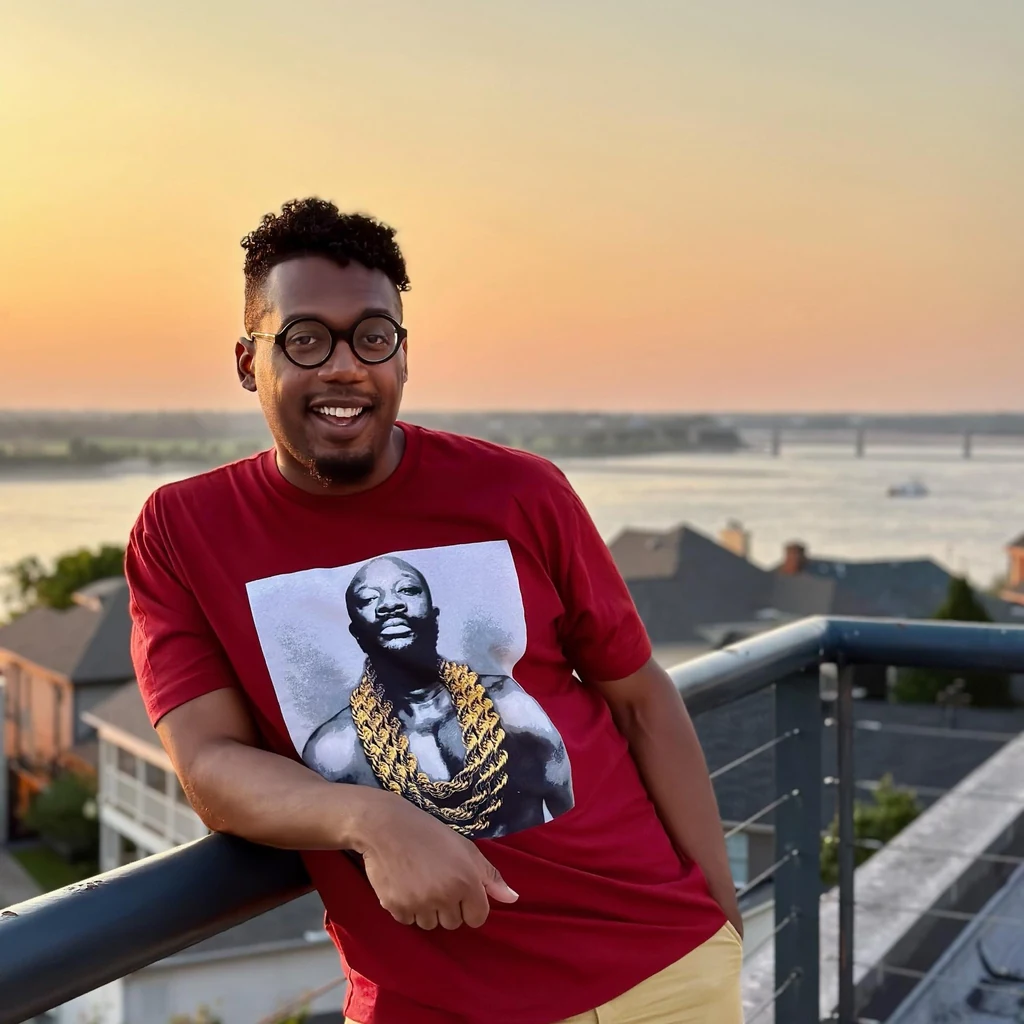
Deeneaus Polk on a balcony at sunset

Wie gehts, wie stehts!?

Workforce. Economic. Community.

Development

A Southern question.
A transatlantic perspective.

I’m Deeneaus “De” Polk, from Pascagoula and Moss Point on Mississippi’s Gulf Coast. I’ve grappled with the pursuit of opportunity since spending my junior year of high school studying abroad in Germany.

I saw communities where training and skilled work could support a comfortable family life. What stayed with me was a sense of collective responsibility: people contributing to institutions that, in turn, helped people build their lives. I wanted the same for the communities where I grew up. Now, nearly 25 years later, I’m still in pursuit of that dream.

I came home fascinated by the connection between apprenticeship, specialized skills, and Germany’s industrial economy. I wanted to understand how the German approach helped people feel like they belonged in a robust, export-oriented economic system, regardless of whether they had a college degree.

That question has followed me through workforce policy, years of living and working in Germany, and now through experiencing local economic development in the Deep South. I founded 3LEVATE to bring those experiences together, with a particular focus on rural Black communities. In them, I see the Dörfer (villages) I got to experience as a kid. Grounded in ancestral roots, guided by lasting opportunity and promise.

The apprentice could
become the CEO.

My German experience continued through Fulbright, German Chancellor, and Robert Bosch Fellowships, with work and research around vocational education and the future of work.

Harvard Kennedy School · MPP University of Mississippi · BA Mississippi Gulf Coast Community College · AA
Read my ERC profile

Why 3LEVATE

Concentric circles.
A shared center.

Workforce, economic, and community development have to move in tandem for a community to thrive.

Workforce development needs an economy that values people’s skills. Economic growth needs people from communities who can participate in fostering more. Communities with the voice, relationships, and institutions to shape how it unfolds for generations to come.

I see these as concentric circles around the same purpose. Each strengthens the others. Across my career, I’ve come to understand each circle more deeply and why moving them together matters.

A Thriving Community

The three circles of 3LEVATE Three concentric circles labeled Community, Economic, and Workforce sit beneath the heading A Thriving Community. Development is written below and outside the circles. All three move together. Community Economic Workforce
Development

Learning through the work.

Workforce
Development

Skills. Opportunity.
Ownership.
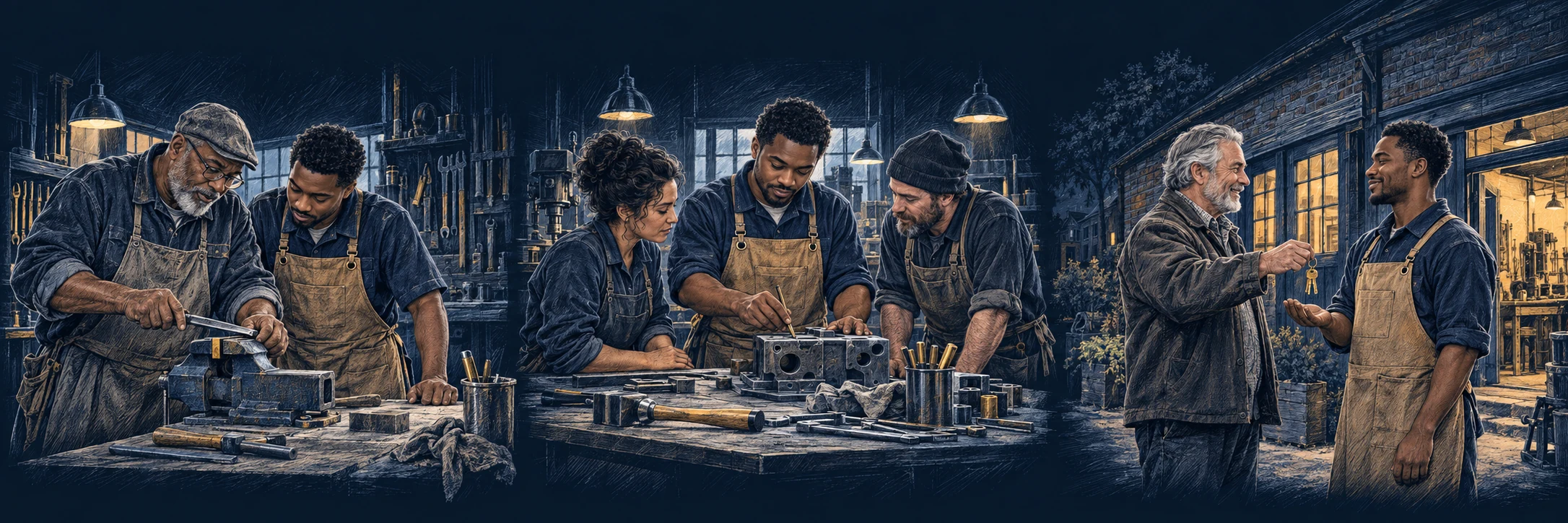
Illustrated vision of the same person learning with a mentor, leading skilled work, and receiving the keys to an existing business.

Learn alongside someone who knows the work. Build the skills and confidence to contribute.

My professional starting point was workforce development. At HOPE and the Mississippi Economic Policy Center, I worked on policies and programs that helped people access higher education funding and opportunity. Later, I directed the Mississippi Apprenticeship Program, working with employers and five community colleges. Our team helped create hundreds of new apprenticeships.

I’m interested in apprenticeship systems with a clear return for workers, employers, and communities. That means understanding what employers need, what workers can earn, and how education and training partners can build a pathway together.

Where I want that pathway to lead: apprentices becoming the next generation of entrepreneurs through Entrepreneurship Through Acquisition, taking ownership of an existing business.
Economic
Development

Research that helps
people make choices.

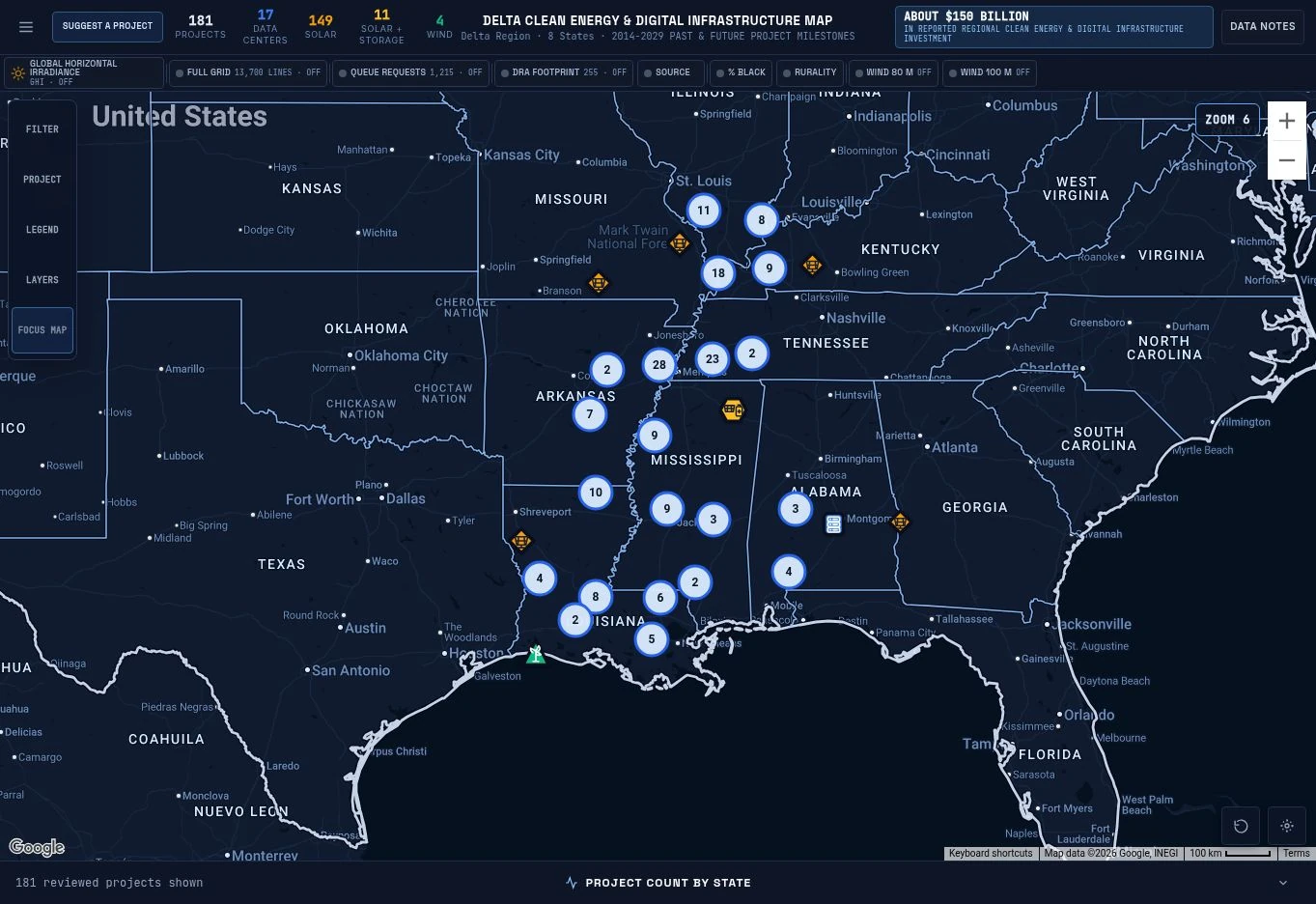
Map of clean energy and digital infrastructure projects across the Delta region, with clusters through Mississippi and Louisiana. Explore the map

Workforce development first exposed me to the systems behind regional economies. With the Delta Regional Authority, I’ve supported Regional Development Plan IV, investment analysis, and funding allocation across the agency’s eight-state region. I developed a funding allocation model and data tools to help inform where resources go.

That work brings economic and demographic analysis together with questions about infrastructure, employers, and institutional capacity. A map or a model becomes useful when it helps people understand their choices and decide what to do next.

Through the Economic Recovery Corps, those questions became local in St. Helena and Washington Parishes. Attracting a project is part of the work. So is asking who can participate, what institutions are needed, and how opportunity takes root.

Explore the investment map

Community
Development

Who gets to shape
what comes next?

In Louisiana, my ERC work is hosted by the St. Tammany Economic Development Corporation, alongside the St. Helena Economic Development Foundation and Washington Parish Economic Development Foundation. I’ve supported leadership transitions, board engagement, economic asset mapping, and coordination around development readiness.

In St. Helena, I saw the community benefit agreement process led by the Center for Planning Excellence with SHED bring people together to name their priorities. My contribution includes research and coordination around community benefits and industrial development boards. Local leadership gives that work its direction.

In West Jackson, I’ve supported stakeholder engagement and survey analysis with the West Jackson Economic Development Group and Metro Boomin. The findings brought workforce, housing, education, and organizational coordination priorities into a broader planning effort.

See the Louisiana work

The Work

What I bring
to the table.

And what I’ve learned
along the way.

Pick something up.

Regional analysis

Making choices
visible.

Clean energy and digital infrastructure projects across the Delta region on the 3LEVATE investment map

Where investment meets place.

I bring economic and demographic research together with questions about infrastructure and investment. At DRA, I supported Regional Development Plan IV and developed a funding allocation model and data tools to help inform where resources go across the eight-state region.

Explore my investment map

Workforce strategy

Designing a way
into skilled work.

Questions behind the design

For workers
Skills, earnings, a future.
For employers
Training tied to the work.
For communities
Opportunity that stays.

And a path toward ownership?

I directed the Mississippi Apprenticeship Program, working with employers and five community colleges as our team created hundreds of new apprenticeships. I now want to build on that experience with clearer returns for workers, employers, and communities, and pathways toward acquiring an existing business.

Stakeholder engagement

Listening for
what matters.

Questions I bring to the work

Whose priorities are shaping the investment?

What does the evidence tell us?

Who needs to be part of the conversation?

In St. Helena, I supported research and coordination around community benefits and industrial development boards. CPEX, SHED, and local leaders led the community benefits process. In West Jackson, I supported stakeholder engagement and survey analysis with the West Jackson Economic Development Group and Metro Boomin.

See the Louisiana work

Organizational capacity

Giving the work
somewhere to live.

What I help connect

Local leadership Board & staff rolesRegional partners A shared work plan

Through ERC, hosted by St. Tammany EDC alongside SHED and Washington Parish Economic Development Foundation, I supported leadership transitions, board engagement, economic asset mapping, and coordination around development readiness. The work includes clarifying roles, connecting partners, and helping organizations prepare to carry the work forward.

A Southern
Mittelstand.

What institutions would allow skilled workers, locally rooted businesses, and communities across the Deep South to grow stronger together?

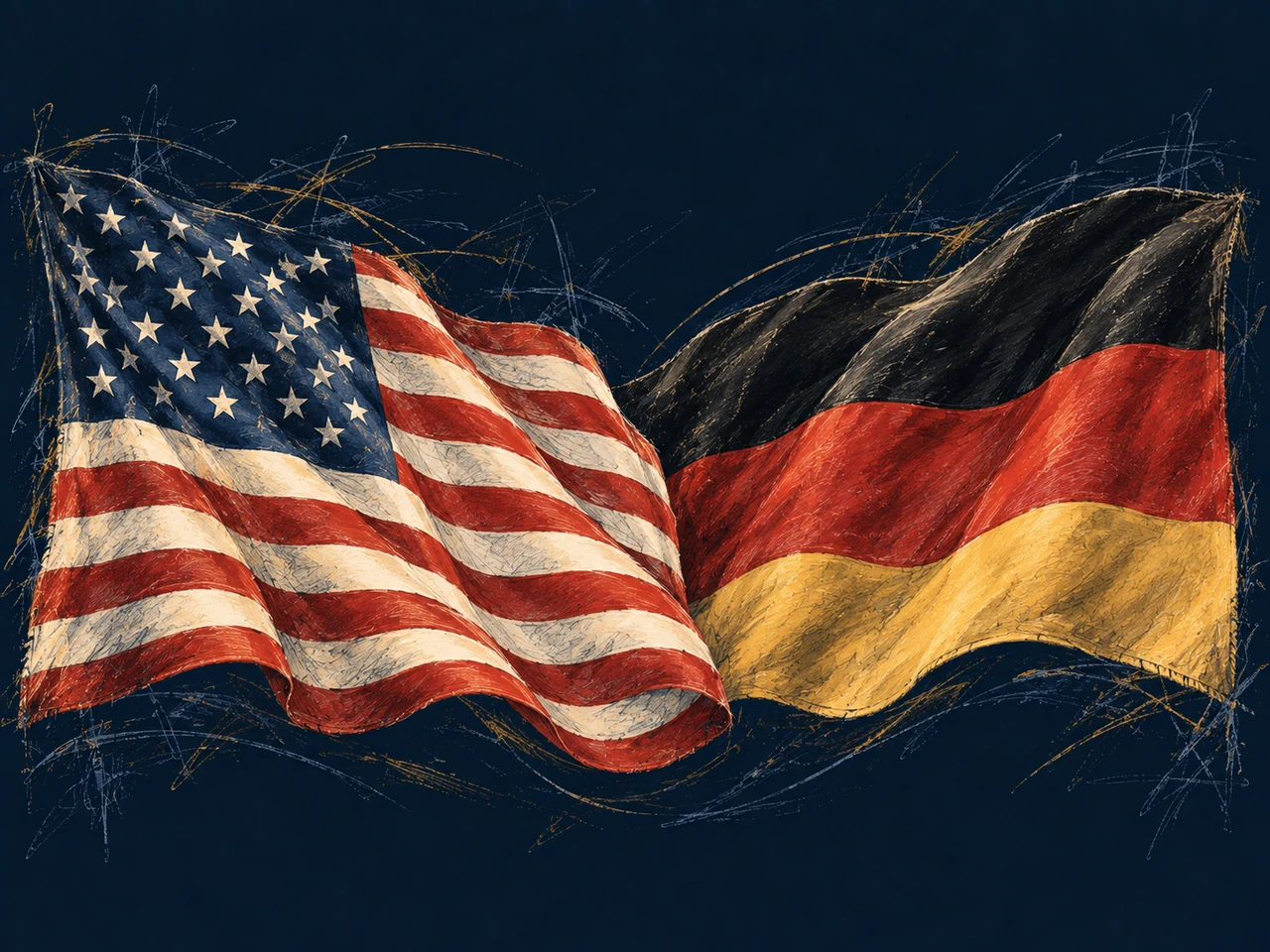
The American and German flags sweeping toward each other in a shared pencil illustration.

I’m exploring a Southern Mittelstand: an economy of skilled people and locally rooted businesses, supported by institutions that help both endure. My earlier work on community benefit plans with the U.S. Department of Energy, and my experience with local community benefit agreements, have brought me back to the collective responsibility I first encountered in Germany.

I want to understand how investment can support institutions that endure: systems that help people train, build businesses, raise families, and participate in the decisions that shape their communities. That brings all three circles back into view.

What can the Deep South and Germany learn from each other as both confront another industrial transition?

The Deep SouthDeutschland
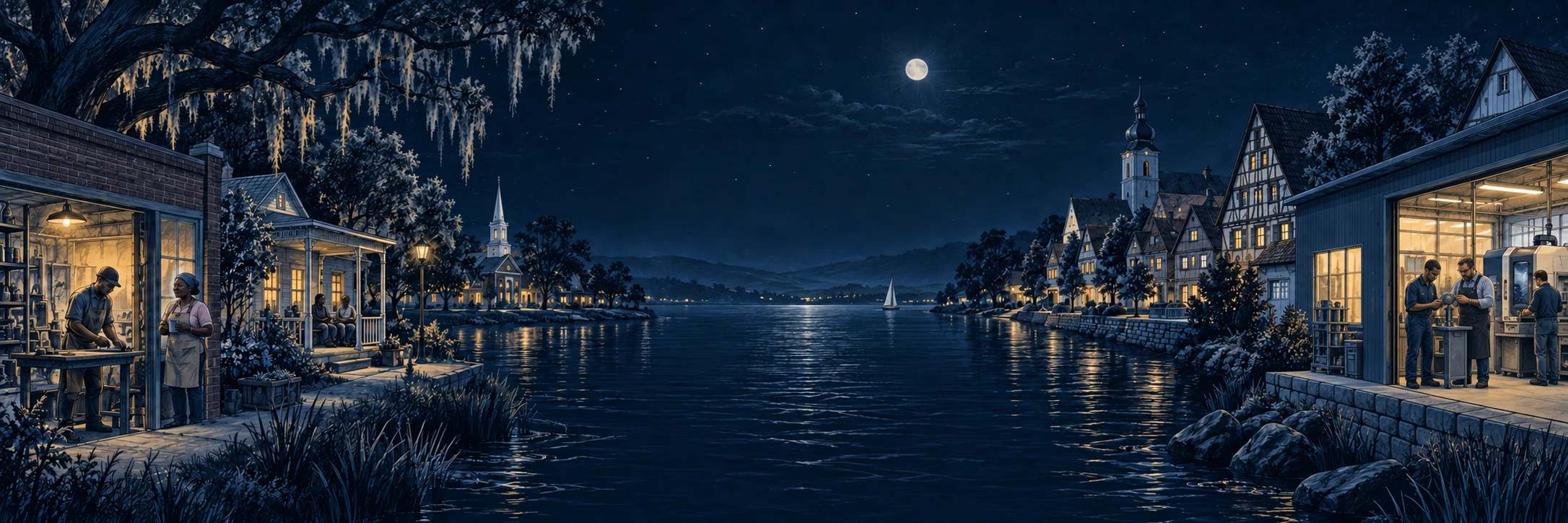
An imagined connection between a Deep South community beneath live oaks and a German village, with workers standing on the dry floor inside a warmly lit workshop.

How can training give people a dependable route into skilled work and a life in the community they call home?

How can skilled workers become the next generation of owners, carrying local businesses and their knowledge forward?

What institutions help people and businesses plan, withstand disruption, and keep opportunity rooted locally?

Learning in both directions.

Ideas, put into practice.